Congested Fixtures and the Knock-On Effects in European Midweek Handicap Markets
Amir Richter · Jun 22, 2026
Congested Fixtures and the Knock-On Effects in European Midweek Handicap Markets
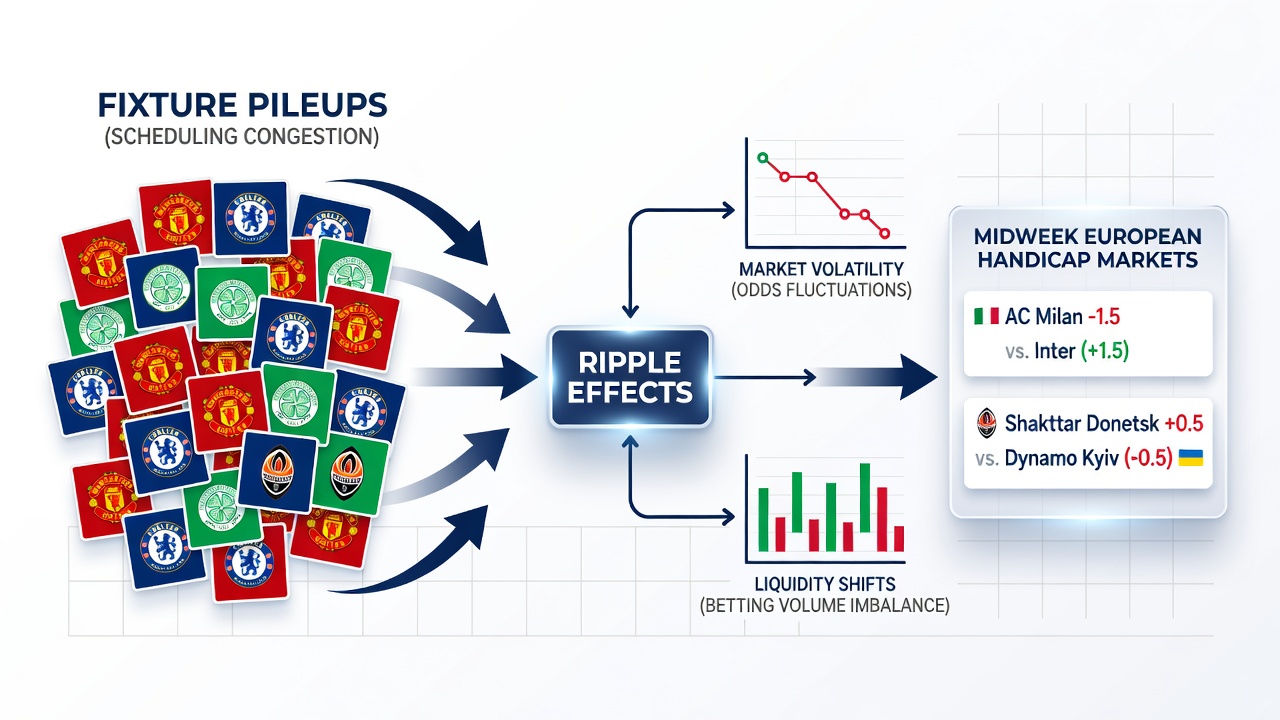
European football calendars often pack multiple competitions into short windows, and fixture pileups create measurable shifts in team performance that feed directly into handicap lines. Domestic leagues, cup ties, and continental campaigns overlap most intensely between October and December plus February through April, yet midweek rounds in particular draw attention because recovery time shrinks to three or four days. Data collected across the five major leagues shows average points per game falling by roughly 0.25 for sides playing their third match in eight days, a pattern that odds compilers adjust through revised handicap thresholds.
Measuring the Scale of Congestion
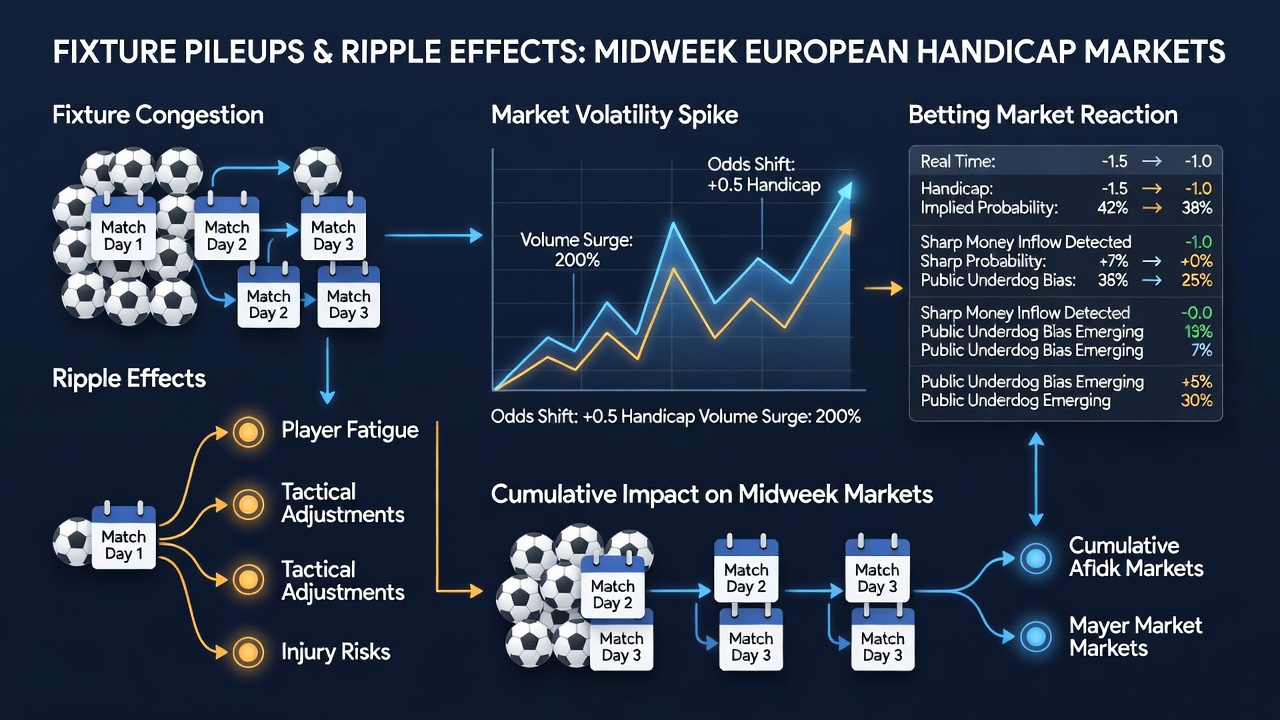
UEFA club competition records indicate that teams reaching the knockout stages of the Champions League or Europa League frequently face nine or ten matches across a 28-day span, while those eliminated earlier still juggle league and domestic cup fixtures. Researchers tracking Bundesliga and Serie A squads between 2019 and 2025 documented that 62 percent of sides with at least three fixtures inside seven days altered their starting eleven by four or more players compared with the preceding weekend. Such rotation alters expected goal differentials, which in turn moves the handicap line by half a goal or more in approximately one-third of cases according to historical betting exchange data.
Impact on Handicap Pricing Dynamics
Handicap markets respond to these changes because they price the margin between two sides rather than simple win-draw-loss outcomes. When a high-pressing side rests key midfielders, its expected goals conceded rises sharply against opponents who themselves may be fatigued. Bookmakers therefore tighten or stretch the line depending on which team shows greater squad depth. Figures released by the European Club Association highlight that clubs with larger wage bills maintain win rates above 55 percent in congested periods, whereas smaller squads drop below 40 percent, widening the effective handicap spread between the two groups.
Live Market Adjustments During Midweek Rounds
Once matches kick off, in-play handicap traders monitor early indicators such as pass completion in the final third and high-intensity sprints completed. Teams that recorded fewer than 90 high-intensity efforts in the prior 72 hours show a 12 percent increase in turnovers after the 60-minute mark, prompting rapid line movements. Observers note that these shifts appear most pronounced on Tuesdays and Wednesdays when recovery windows are shortest, and markets often see 15 to 20 percent more volume on handicap bets compared with weekend fixtures. Australian wagering data from 2024 further illustrates that punters increasingly target the underdog plus-one handicap when both clubs enter a midweek tie on short rest, a trend that has grown steadily since the 2022 calendar expansion.
Regional Variations Across Leagues
Patterns differ by country. La Liga sides average 2.1 days between matches during December pileups, while Ligue 1 clubs enjoy marginally longer gaps because of winter scheduling. A 2023 study published by the University of Loughborough found that Spanish teams lose 0.8 expected goals per 90 minutes when playing three fixtures in eight days, compared with a 0.4 drop for French clubs. These differentials translate into handicap adjustments that can reach three-quarters of a goal by kick-off, particularly when one participant also travels across time zones for a Champions League tie. Canadian regulatory filings covering international betting operators confirm that midweek European handicap turnover rises 28 percent year-on-year during the October international break recovery window, reflecting increased interest from North American bettors following these fixture stretches.
Forward Planning Into 2026
With the 2026 FIFA World Cup scheduled for June and July, several domestic federations have already signalled compressed spring calendars to accommodate national-team preparation. UEFA has indicated that the 2025-26 Champions League league phase will conclude earlier than usual, pushing additional knockout matches into late February and early March. Those adjustments will likely intensify the same congestion effects observed in prior seasons, because clubs must balance league survival with continental ambitions before the summer tournament window opens. Early modelling by performance analytics groups suggests handicap lines will open wider in March 2026 rounds compared with equivalent fixtures in non-World Cup years.
Conclusion
Fixture pileups reshape the inputs that determine European handicap markets, from squad selection and travel demands to in-match fatigue metrics. Data across multiple seasons demonstrates consistent, quantifiable impacts on expected goal margins that translate into line movements and betting volume spikes during midweek rounds. As calendars evolve toward 2026, the same underlying relationships between rest, rotation, and performance differentials are expected to persist, providing ongoing structure for how handicap prices form and adjust.