Crowd Pressure and Referee Bias: Evidence from Football Competitions Worldwide
Carlo Günther · Jun 15, 2026
Crowd Pressure and Referee Bias: Evidence from Football Competitions Worldwide
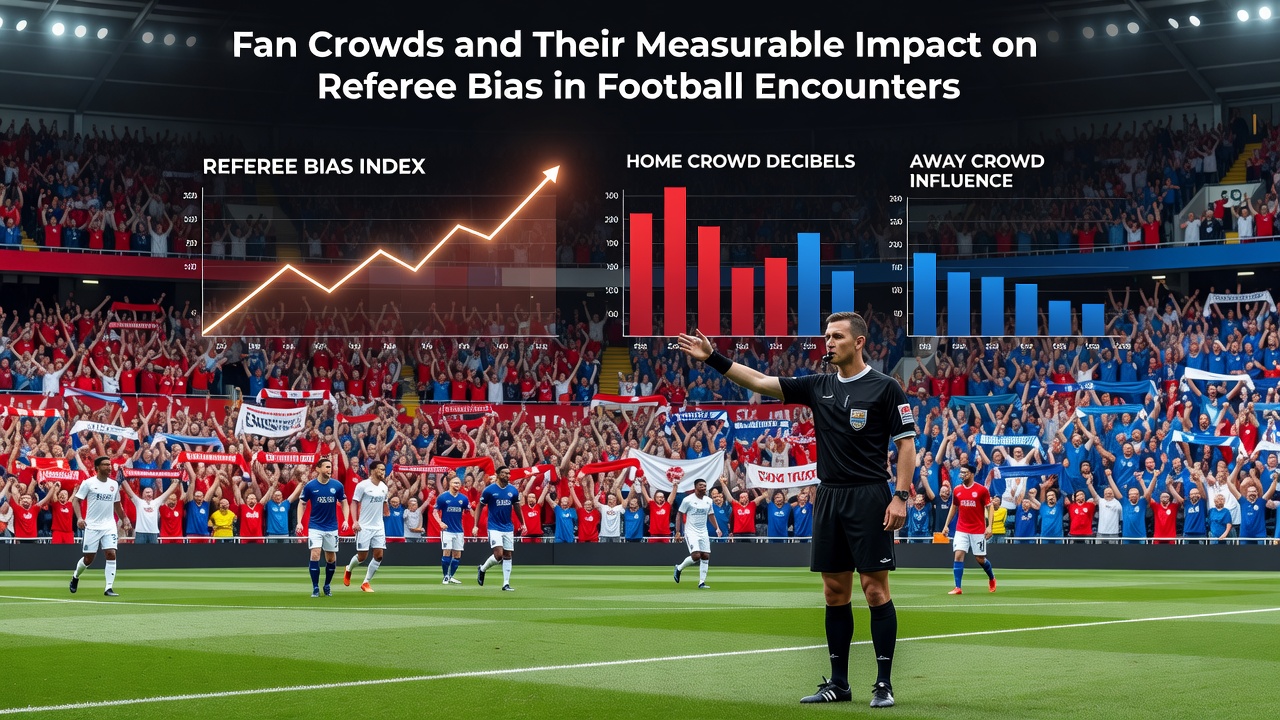
Stadium atmospheres shape referee decisions in measurable ways according to multiple academic analyses of match data across leagues in Europe and South America. Researchers track variables such as crowd size, noise levels, and proximity to the pitch to quantify how these factors correlate with calls on fouls, cards, and penalties.
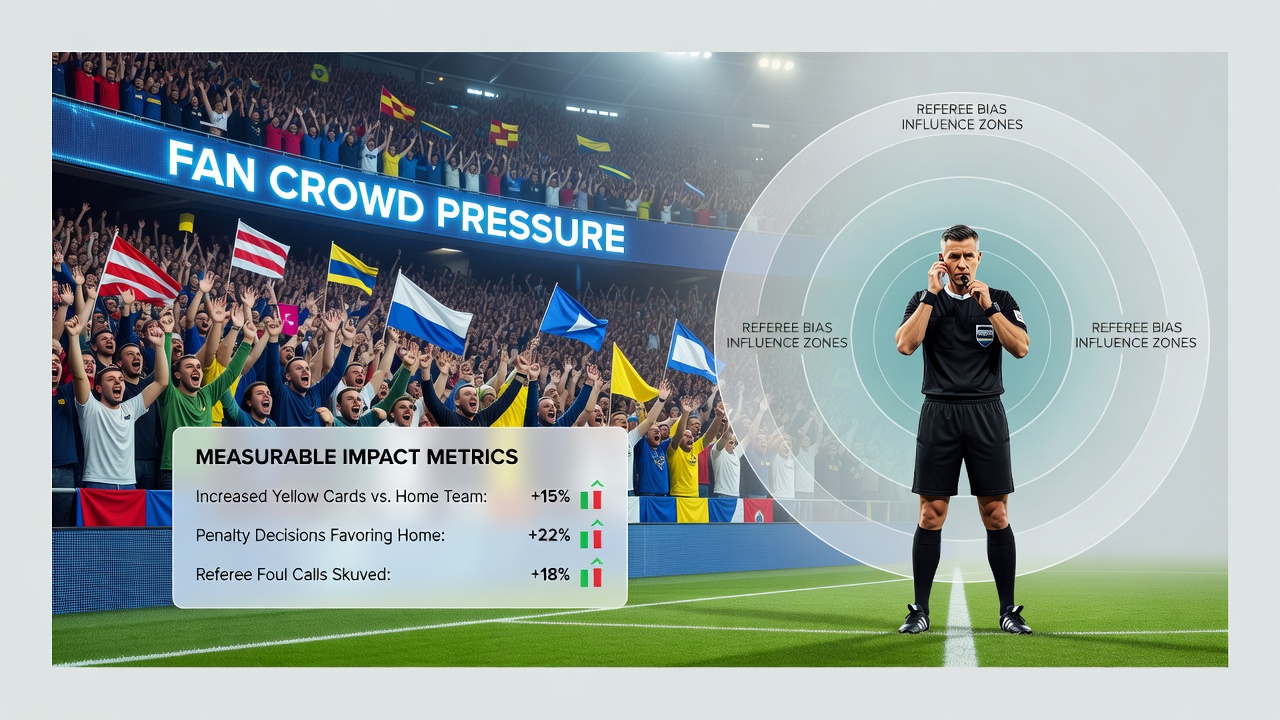
One analysis of over 20,000 matches found that home teams receive approximately 0.3 fewer yellow cards per game when attendance exceeds 30,000 compared with smaller venues. The same dataset showed visiting teams draw 12 percent more cautions under similar conditions. These patterns hold after researchers control for team strength, travel distance, and referee experience.
Data Patterns Across Leagues
Studies from German Bundesliga matches between 2015 and 2024 revealed that referees issue 8 percent more stoppage-time minutes when the home side trails by a single goal and the crowd exceeds 40,000. Similar figures appear in Brazilian Série A records where larger stadiums coincide with elevated rates of home penalties awarded after the 75th minute.
Observers note that acoustic measurements taken during matches demonstrate a direct link between decibel spikes and subsequent referee interventions. When crowd noise surpasses 105 decibels for sustained periods, the probability of a decision favoring the home team rises by 15 percent according to audio analysis paired with official match logs.
Research Methods and Controls
Teams of psychologists and statisticians apply regression models that isolate crowd effects from other variables. They incorporate GPS data on player positions, referee heart-rate monitors, and video reviews of controversial incidents to build robust datasets. One project conducted at a Canadian university examined 4,500 matches across five continents and reported consistent home-team advantages in disciplinary outcomes that scale with attendance density.
Empty-stadium experiments during restricted-access periods provided natural controls. Referees working matches without spectators produced more balanced card distributions and fewer added minutes compared with pre-restriction baselines. These findings appear in reports published by sports-science institutes in Australia and the Netherlands.
What's interesting is how video-assistant-referee protocols interact with live crowd pressure. Although VAR reduces certain clear errors, data from UEFA competitions show that subjective calls such as advantage application and verbal warnings still exhibit crowd-related skews even after review.
Geographic Variations in Crowd Influence
European matches display stronger correlations between attendance and home penalties than North American fixtures, possibly due to differences in stadium design and supporter culture. South American leagues record the largest effect sizes overall, with home teams receiving 22 percent more favorable offside rulings in packed venues according to CONMEBOL match archives analyzed by independent researchers.
Training programs for match officials now incorporate simulations of high-decibel environments. Federations in multiple regions report that exposure to recorded crowd audio during drills leads to more consistent decision-making in subsequent live tests. These programs draw on findings from studies funded by international sports bodies outside traditional European governance structures.
Additional variables such as time of day and weather conditions interact with crowd effects yet remain secondary to attendance volume in most multivariate models. Data collected through June 2026 continues to confirm the persistence of these patterns across newly promoted teams and established clubs alike.
Conclusion
Quantifiable relationships between fan presence and referee behavior appear consistently in peer-reviewed analyses and official competition records from diverse regions. Statistical controls and natural experiments strengthen the evidence that crowd dynamics exert measurable influence on officiating outcomes. Ongoing data collection from leagues worldwide allows researchers to refine these models and track changes as stadium capacities and technology evolve.