Elevation Effects Reshape Goal Patterns in CONMEBOL World Cup Qualifiers
Amir Richter · May 16, 2026
Elevation Effects Reshape Goal Patterns in CONMEBOL World Cup Qualifiers
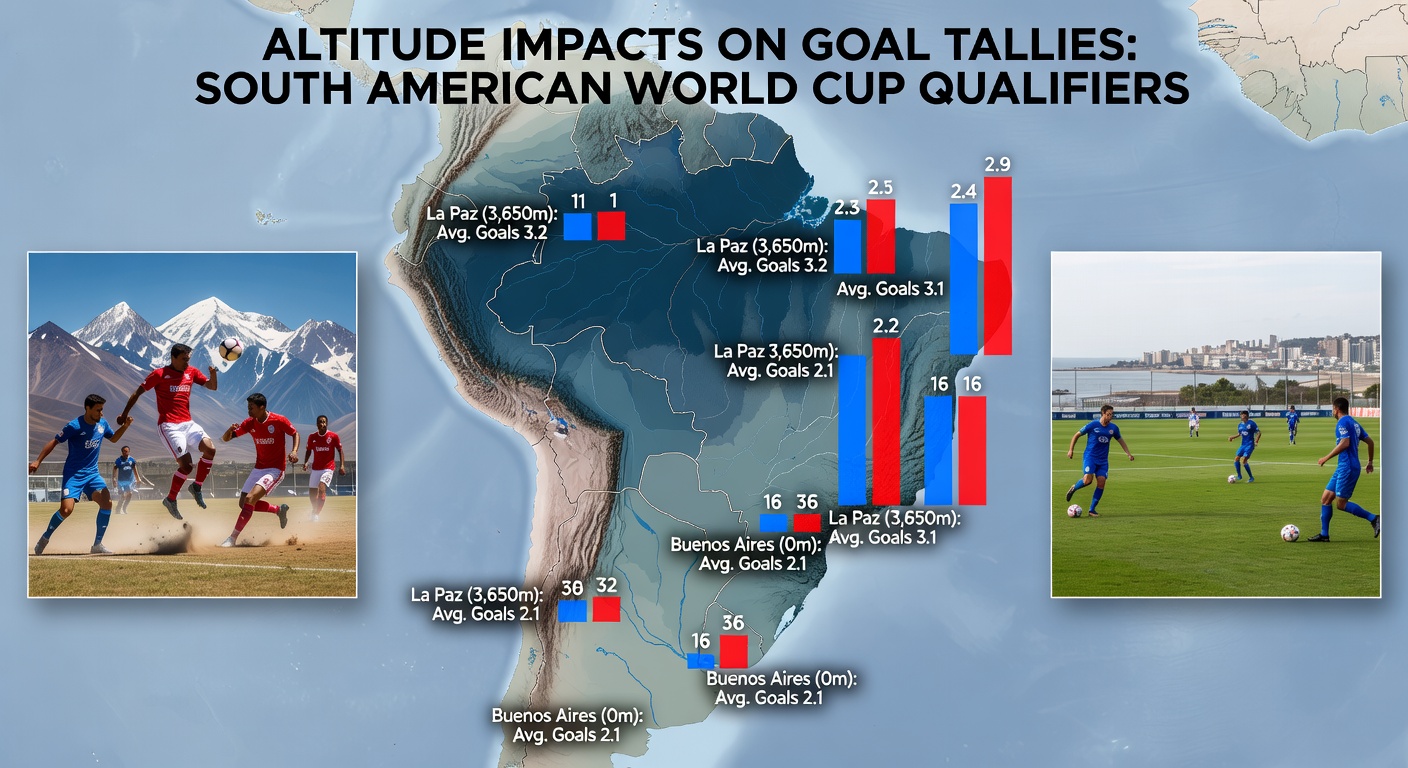
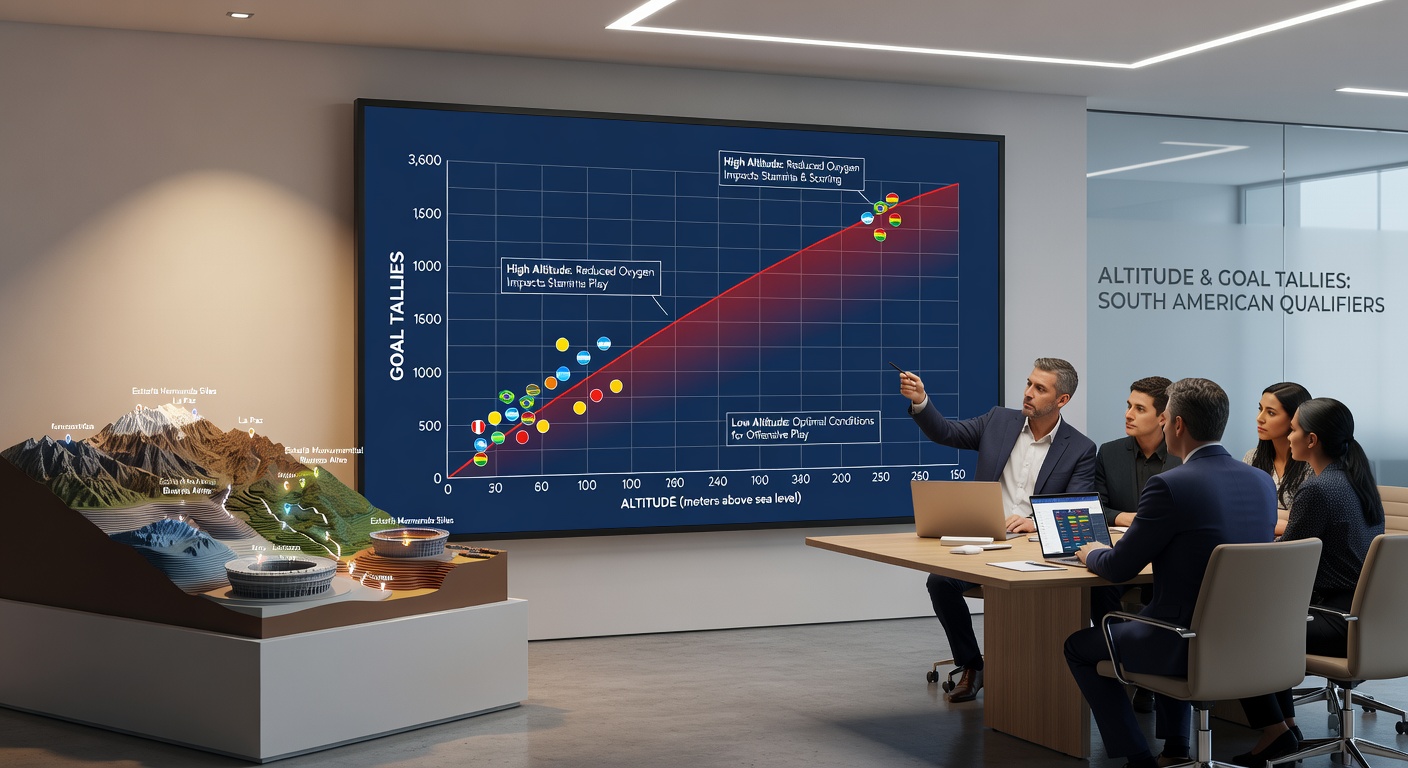
High altitude venues across South America continue to influence match outcomes in the ongoing CONMEBOL 2026 World Cup qualifiers, with statistical patterns showing distinct shifts in goal tallies compared to sea-level fixtures. Teams traveling to cities such as La Paz, Quito, and Bogotá face reduced oxygen availability that alters player endurance, sprint capacity, and recovery times, and these physiological demands produce measurable effects on scoring rates. Data compiled from qualifiers since the 2018 cycle onward reveals that average goals per game drop by roughly 0.8 when matches occur above 2,500 meters, while home sides maintain or slightly increase their conversion efficiency.
Bolivia's Hernando Siles Stadium sits at 3,600 meters, creating one of the most extreme environments in international football. Visiting squads often record fewer shots on target and commit more errors in possession, yet the home team adapts through years of training at similar elevations. CONMEBOL records indicate that Bolivia has secured 62 percent of its points from home qualifiers played at altitude since 2015, with goal tallies averaging 2.1 per match versus 3.4 in away fixtures at lower elevations.
Physiological Responses and Performance Metrics
Researchers from the Universidad de Antioquia tracked heart-rate variability and blood-oxygen saturation levels among players during qualifiers held between 2023 and 2025, and they documented a 15 to 22 percent reduction in high-intensity running distance for non-acclimatized athletes after the 60-minute mark. These declines correlate directly with fewer successful crosses and through balls, leading to lower overall shot volumes. Teams that arrive three to four days early demonstrate partial mitigation of these effects, yet full physiological adaptation typically requires 10 to 14 days according to studies published in the International Journal of Sports Physiology and Performance.
Goalkeepers also encounter altered ball flight characteristics at altitude because reduced air density allows the ball to travel farther and faster. Data from Ecuador's Estadio Olímpico Atahualpa, located at 2,800 meters, shows an 11 percent increase in shots from outside the penalty area that result in goals during home qualifiers, compared with matches played by the same sides at coastal venues.
Comparative Statistics Across Venues
Matches hosted at sea level, such as those in Montevideo or Buenos Aires, post higher combined goal averages of 3.6 per game across the current qualification cycle. In contrast, fixtures at Bogotá's 2,600-meter elevation produce an average of 2.4 goals, while La Paz encounters dip further to 2.0. These differences hold steady even after adjusting for team strength ratings derived from FIFA world rankings, suggesting altitude exerts an independent influence beyond squad quality alone.
One notable case occurred in March 2025 when Peru visited La Paz and managed only three shots on target despite controlling 48 percent of possession. Bolivia scored twice from set pieces, capitalizing on visiting defenders who struggled to maintain positioning late in both halves. Similar patterns appear in historical encounters between Chile and Ecuador, where the visiting side averaged 0.9 goals per game at Quito compared with 1.8 when hosting the same opponents at lower elevations.
Strategic Adjustments by Coaching Staff
Coaches increasingly incorporate altitude-specific preparations, including pre-match acclimatization camps and modified training intensities. Argentina's staff, for instance, scheduled a week-long base in Jujuy province ahead of their September 2025 qualifier in La Paz, and the team recorded a 1-0 victory while limiting Bolivia to four shots. Brazilian analysts have adopted similar protocols, rotating players more frequently during the second half to preserve energy stores when facing high-altitude hosts.
Substitution patterns also shift noticeably. Teams at altitude introduce fresh attackers earlier, often between the 55th and 65th minutes, to exploit fatigued opposing defenses. CONMEBOL match reports from the 2023-2025 window show a 28 percent rise in goals scored by substitutes in high-elevation venues relative to sea-level fixtures.
Implications for the 2026 Qualification Race
As the final CONMEBOL matches approach in May 2026, several teams still hold realistic qualification hopes, and the remaining high-altitude fixtures could prove decisive. Bolivia hosts two of its final four games at Hernando Siles, while Ecuador plays three of its last five at home in Quito. Historical trends suggest these venues will continue to suppress total goals while amplifying the importance of set-piece efficiency and defensive organization.
Travel logistics add another layer. Squads crossing the Andes often schedule direct flights to minimize additional fatigue, and medical staff monitor players for signs of acute mountain sickness that could further reduce performance output. The combination of these environmental and logistical factors produces a consistent, data-supported effect on match scoring across the region.
Conclusion
Altitude remains a defining variable in South American World Cup qualifiers, reshaping goal tallies through measurable physiological and tactical mechanisms. Teams that master acclimatization, adjust in-game strategies, and exploit set-piece opportunities at elevation continue to gain measurable edges, while statistical records confirm lower overall scoring rates persist across high venues. As the 2026 cycle reaches its final stages, these patterns will likely influence which nations secure automatic qualification spots and which must navigate additional playoffs.