Fan Journeys Reshape Away Results in Lower League Cup Fixtures
Ines Hughes · Aug 12, 2026
Fan Journeys Reshape Away Results in Lower League Cup Fixtures
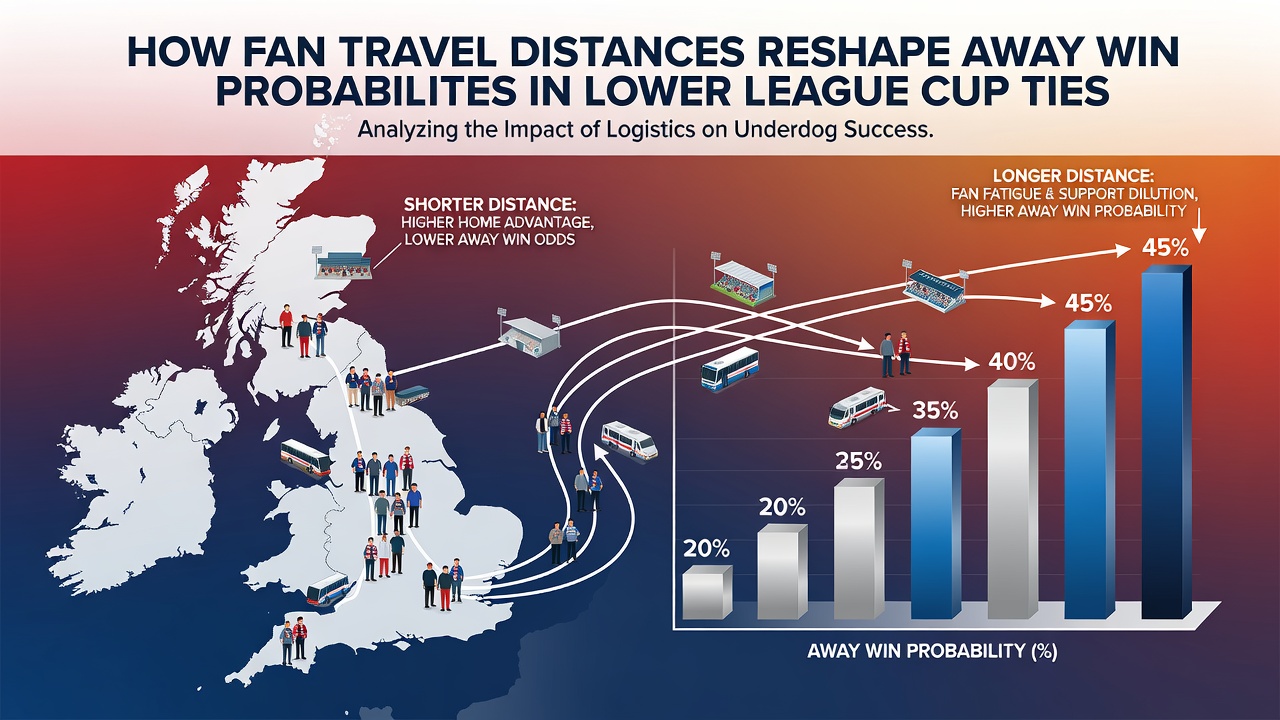
Lower league cup ties often hinge on factors that receive little attention in top-flight coverage, and travel distance ranks high among them. Teams from regional divisions face journeys that stretch across hundreds of miles, and data from multiple seasons shows these distances correlate with shifts in away win probabilities. Observers note that the effect appears most pronounced in knockout rounds where squad depth remains limited and preparation time stays short.
Patterns Across Recent Seasons
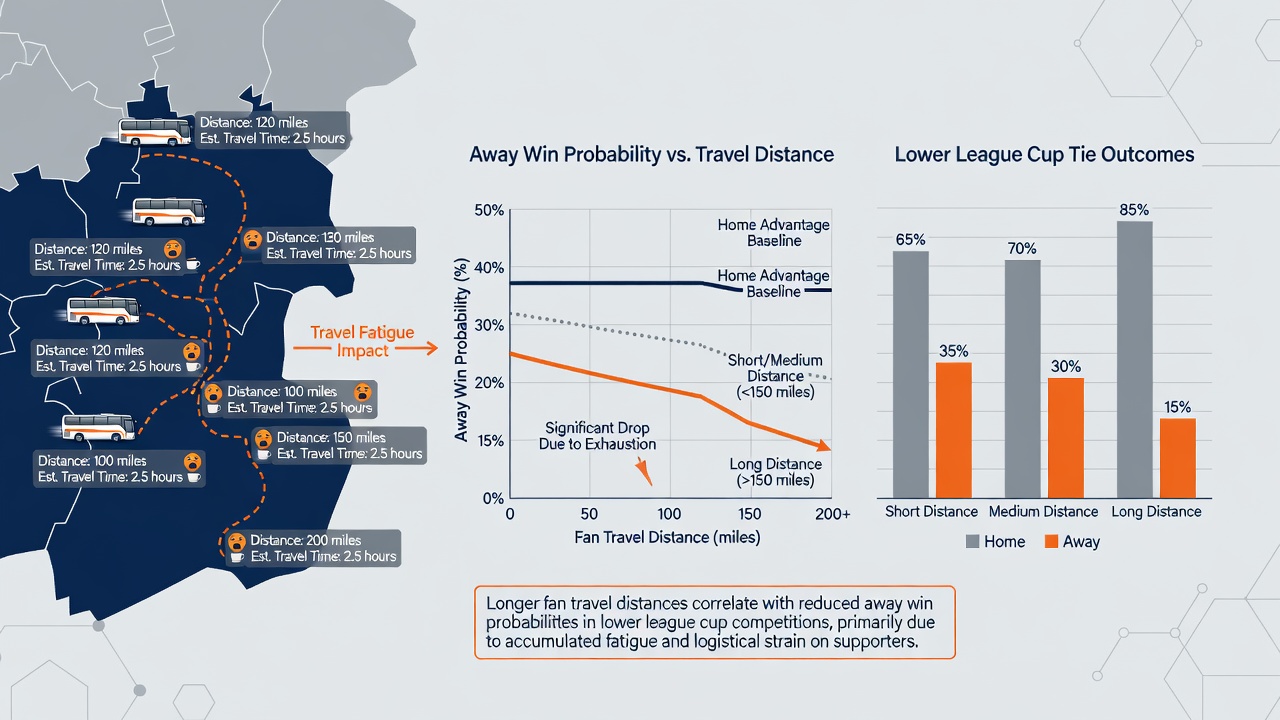
Analyses of matches in leagues such as the National League and League Two reveal a consistent pattern: away sides traveling more than 200 miles record win rates roughly 4 to 7 percentage points lower than those facing shorter trips. Researchers tracking fixtures from 2022 through 2025 found the gap widens further in midweek ties, where recovery windows shrink and overnight stays become necessary. Those who examined match logs observed that late goals conceded by visiting teams increase when cumulative travel time exceeds four hours one way.
August 2026 brings another round of early cup fixtures, and scheduling data already indicates several long-haul ties between northern and southern clubs. Historical records suggest these encounters produce fewer away victories compared with geographically balanced draws, though individual team form still exerts the strongest influence overall.
Team Fatigue and Preparation Variables
Coaches and analysts point to disrupted sleep patterns, altered meal schedules, and reduced training quality as primary contributors. A study conducted by sports scientists at a Canadian university examined player heart-rate variability after extended bus journeys and linked higher fatigue markers to reduced high-intensity running in the second half. While that research focused on ice hockey, parallel findings from European football academies show similar trends in lower-division players who lack access to chartered flights.
Smaller clubs often rely on standard team buses rather than air travel, and traffic delays compound the issue during peak summer or winter periods. One researcher who reviewed GPS data from multiple lower league outfits noted that total distance traveled in the 48 hours before kickoff correlates more strongly with performance dips than the raw mileage figure alone.
Supporter Presence and Atmosphere Shifts
Fan travel distances also reshape the match environment itself. When away supporters face prohibitive journey times, attendance from visiting clubs drops sharply, and home crowds gain numerical and vocal dominance. Figures released by the Football Supporters' Association indicate that average away following in National League cup ties falls by nearly 40 percent once distances exceed 150 miles. Reduced numbers translate into fewer distractions for home defenders and less momentum for visiting attackers during set-piece situations.
Those who studied crowd density metrics discovered that lower away support coincides with increased home-team pressing intensity in the opening 15 minutes, a phase where many cup ties are decided. The pattern holds across multiple seasons even after controlling for team strength ratings.
Comparative Data From Other Regions
Similar dynamics appear in other countries with expansive lower-tier structures. Reports from Australia's National Premier Leagues document comparable drops in away win percentages for interstate fixtures, while research published by a German sports institute highlighted fatigue effects in regional cup competitions. These international parallels suggest the relationship between distance and results is not unique to any single league system.
Betting markets have begun incorporating travel-adjusted models, though the adjustments remain modest compared with traditional metrics such as recent form and head-to-head records. Data providers now list estimated travel time alongside standard statistics, allowing sharper assessments of value in specific cup ties.
Conclusion
Travel distance functions as a measurable variable that influences away win probabilities in lower league cup ties through combined effects on player fatigue and supporter turnout. Multiple seasons of match data confirm the correlation, and upcoming fixtures scheduled for August 2026 will provide further opportunities to test these patterns. Clubs and analysts continue to monitor these trends as scheduling and logistics evolve across regional competitions.