Fixture Congestion's Role in Determining Weekend Results in Europe's Leading Leagues
Ines Hughes · Jul 22, 2026
Fixture Congestion's Role in Determining Weekend Results in Europe's Leading Leagues
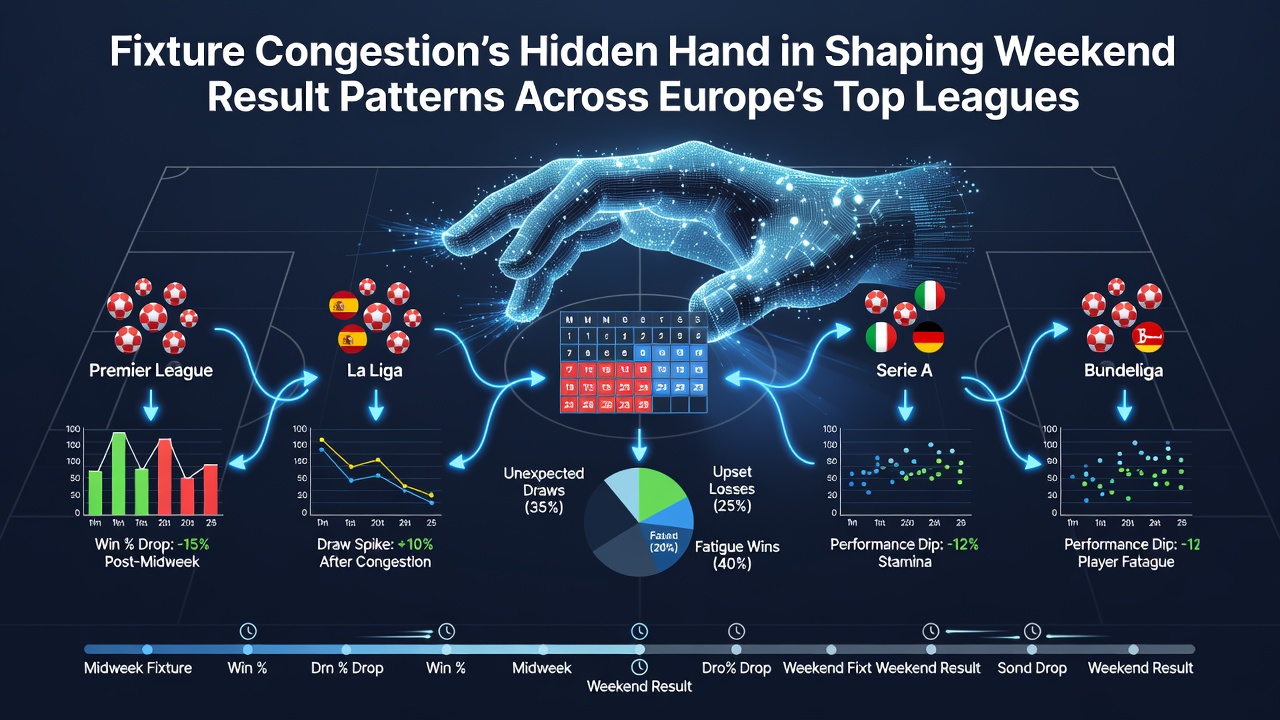
Fixture congestion emerges when clubs face multiple matches within short periods, and data from recent seasons across Europe's top divisions shows clear correlations with weekend outcomes. Teams often play midweek European ties followed by domestic league fixtures, which leads to measurable shifts in win percentages, goal tallies, and draw frequencies according to league records compiled by UEFA and national federations.
Understanding Fixture Density in Major Competitions
Europe's elite leagues operate under calendars packed with domestic cups, continental tournaments, and international breaks, so clubs in the Premier League, La Liga, Bundesliga, and Serie A routinely encounter weeks with three or more games. Research from sports science institutes indicates that recovery windows shrink below 72 hours for many squads during peak periods, while squads with greater squad depth maintain steadier performance levels. Observers note patterns where congested sides record fewer victories on weekends compared to those with extended rest, though the exact margins vary by league and season.
Take the 2025-26 campaign as an example, where expanded Champions League formats added extra fixtures for participating clubs. Bundesliga records from that period reveal that teams averaging under four days between games posted win rates around 8 percentage points lower than their less burdened counterparts. Similar trends appear in Serie A data, where back-to-back away trips after European nights correlate with increased draws rather than outright defeats.
Physical and Tactical Effects on Match Patterns
Studies conducted by the FIFA Medical Centre of Excellence highlight how reduced recovery time elevates fatigue markers such as elevated creatine kinase levels and decreased sprint distances covered in the second half. These physiological changes translate into weekend results through fewer shots on target and higher concession rates in the final 20 minutes. Analysts reviewing La Liga statistics over five seasons found that sides playing midweek European matches lost possession more frequently in weekend encounters, contributing to a rise in counter-attack goals for fresher opponents.
What's interesting is how these effects compound across different competitions. In the Premier League, data shows congested teams achieve lower clean sheet percentages when facing opponents who enjoyed a full week's preparation, whereas Bundesliga sides sometimes mitigate impacts through high-rotation policies that preserve key players for decisive weekend clashes.
Weekend Result Trends Across Specific Leagues
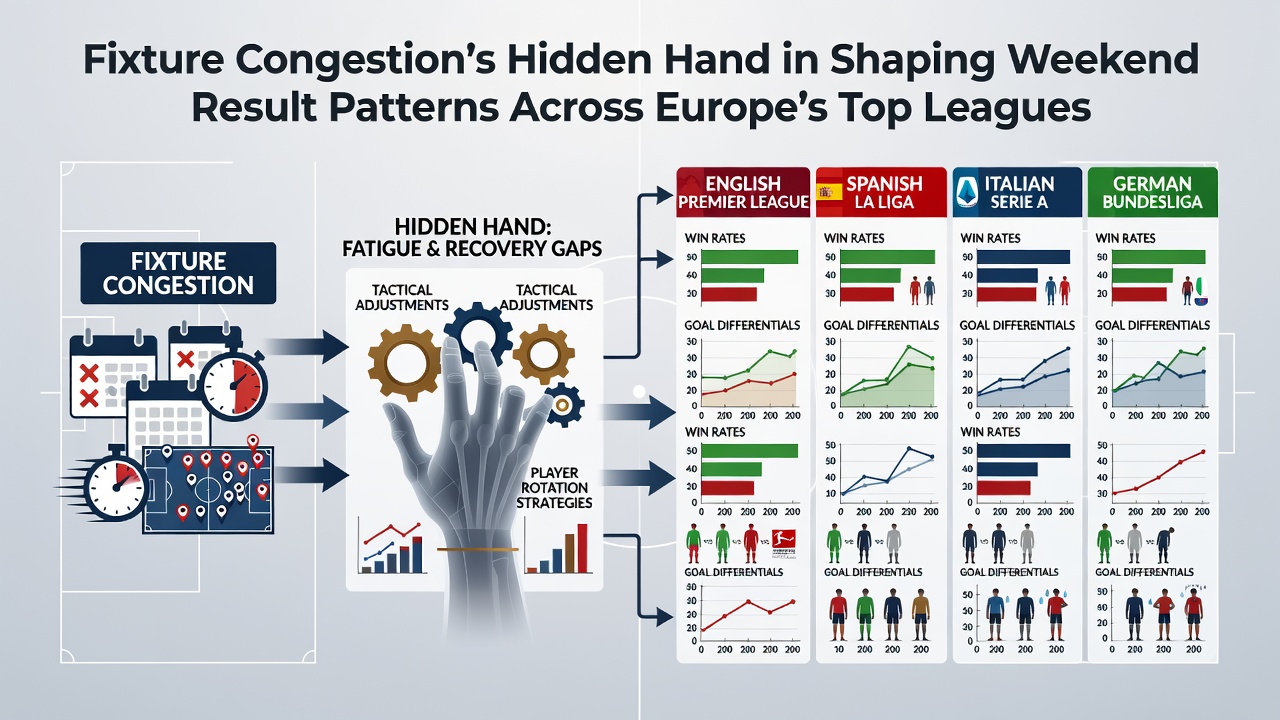
League-specific patterns emerge when researchers examine fixture lists and outcomes side by side. Premier League figures indicate that teams with two or fewer rest days secure approximately 32 percent of available points on weekends, compared with 47 percent for squads with four or more days between games. La Liga reports similar disparities, though the gap narrows during winter months when weather conditions alter playing styles and reduce the emphasis on high-intensity pressing.
Serie A data reveals a distinct uptick in low-scoring draws during congested periods, with matches averaging 2.1 goals instead of the seasonal mean near 2.7. Bundesliga observers have tracked higher goal tallies in some cases, attributed to open play styles that persist even under fatigue. These variations underscore how tactical approaches interact with scheduling pressures rather than fatigue alone dictating every result.
Broader Calendar Pressures Entering 2026
By July 2026, preparations for the FIFA World Cup and ongoing European qualification cycles added further layers to club schedules, prompting governing bodies to review rest protocols. Reports from the European Club Association detail how clubs lobbied for protected weekends during heavy periods, citing performance dips documented in internal analytics. Data released by national federations shows that clubs balancing continental and domestic demands experienced measurable dips in weekend points accumulation, particularly when travel distances exceeded 1,000 kilometres between matches.
Those who've examined multi-season datasets point out that home advantage persists for congested teams, yet the margin shrinks when opponents arrive with superior recovery. Patterns hold across age groups too, with youth academies mirroring senior trends in reserve fixtures when schedules overlap.
Conclusion
Fixture congestion continues to shape weekend outcomes through documented physical, tactical, and scheduling mechanisms across Europe's top leagues. League records, sports science findings, and club performance metrics consistently illustrate how rest intervals influence win rates, goal patterns, and draw frequencies without exception. As calendars evolve toward 2026 and beyond, these dynamics remain central to understanding result distributions in elite competitions.