Fixture Overload in European Cups: Referee Assignment Patterns and Resulting Shifts in Disciplinary and Spot-Kick Markets
Amir Richter · Jul 18, 2026
Fixture Overload in European Cups: Referee Assignment Patterns and Resulting Shifts in Disciplinary and Spot-Kick Markets
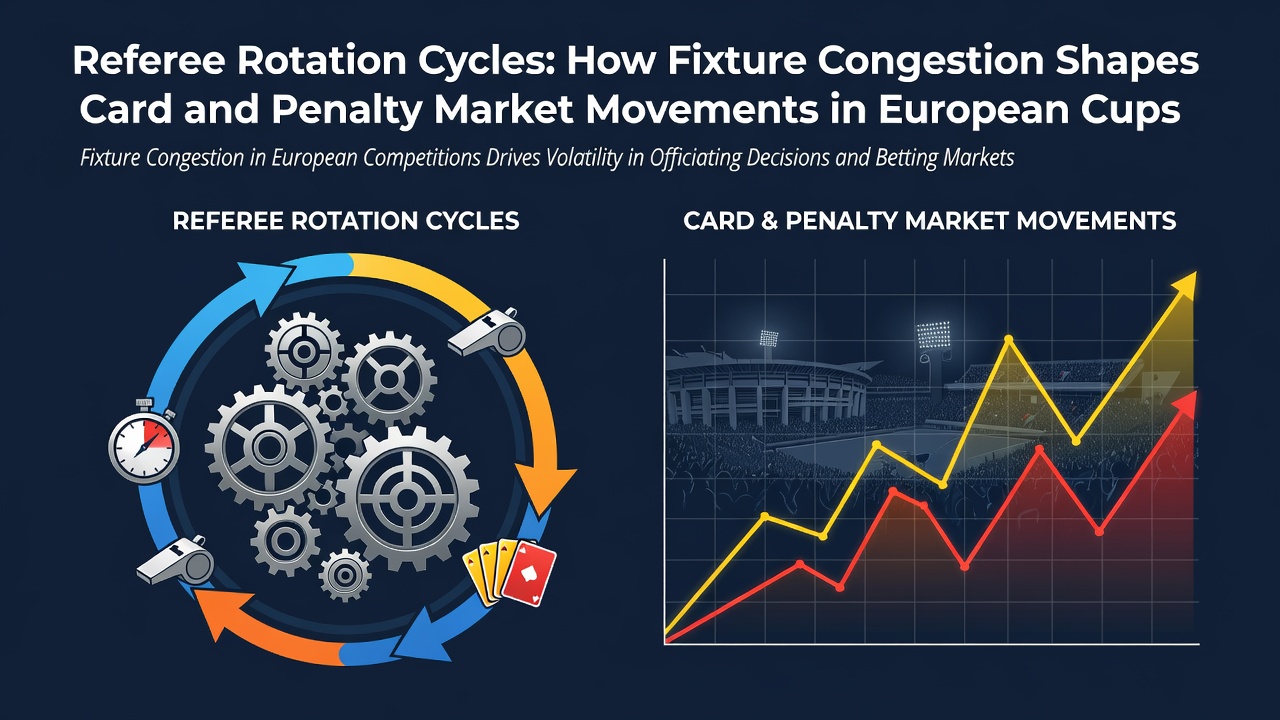
European cup competitions pack multiple high-stakes matches into tight windows, and observers note that UEFA adjusts referee rosters accordingly each season. Data from recent campaigns show that clubs advancing through group stages and knockout rounds face fixture lists that overlap wth domestic schedules, creating periods where travel and recovery time shrink. Those schedules prompt governing bodies to rotate match officials more frequently than in standard league play, which in turn correlates with measurable changes in card counts and penalty awards tracked by betting platforms.
UEFA maintains a panel of elite referees who receive assignments based on performance metrics, availability, and geographic rotation rules designed to limit repeated exposure to the same teams. When congestion intensifies, the governing body draws from a wider pool of officials who may have officiated fewer games in the preceding fortnight. Records indicate that this rotation cycle tends to introduce officials with varying tendencies toward strictness, something analysts track through historical foul and sanction data released after each round.
Patterns Emerging From Congested Calendars
Clubs competing in both the Champions League and Europa League often play three matches across ten days, a schedule that forces UEFA to reassign crews rather than reuse the same quartet. Figures compiled by competition statisticians reveal that card averages rise slightly in the second and third matches of such sequences, particularly when teams travel across time zones. The increase appears tied to fresher officials enforcing rules with less familiarity of player tendencies, rather than any systemic change in playing style.
Researchers tracking referee behavior across multiple seasons have documented that officials returning from domestic leagues after a short break issue fewer cautions in their first European assignment, then adjust toward league norms in subsequent games. This adjustment window coincides with the busiest parts of the cup calendar, including July qualifiers that feed into the main draw. In July 2026 several preliminary rounds overlap with pre-season friendlies for top clubs, creating an early test of how rotation cycles influence early disciplinary markets.
Impact on Yellow and Red Card Volumes
Betting exchanges monitor card totals because historical datasets show measurable deviations when new referee groups enter the cycle. One analysis of 180 Champions League matches found that teams facing officials rotated in from lower-profile leagues recorded 0.4 more yellow cards per game on average than matches handled by repeat officials. The difference narrows once those same referees handle a second fixture within the same competition phase.
Video review protocols introduced in recent years add another layer, since newly assigned officials sometimes review incidents more deliberately when they lack prior context from earlier rounds. Statistics released by competition organizers confirm that penalty reviews leading to cards occur at a marginally higher rate in congested windows, though the absolute numbers remain modest. Market makers therefore adjust lines upward for card props during midweek double-headers while keeping totals stable for weekend league games involving the same clubs.
Penalty Award Fluctuations and Market Response
Penalty decisions follow a similar rotation-linked pattern, though the frequency remains lower than cards. Data aggregated across five European seasons indicate that spot-kick awards increase by roughly 12 percent in matches officiated by officials entering the cycle after domestic rest periods. The uptick stems partly from stricter application of handball and foul thresholds that vary between referee cohorts. Once the same officials handle consecutive European ties, the rate stabilizes closer to season-long averages.
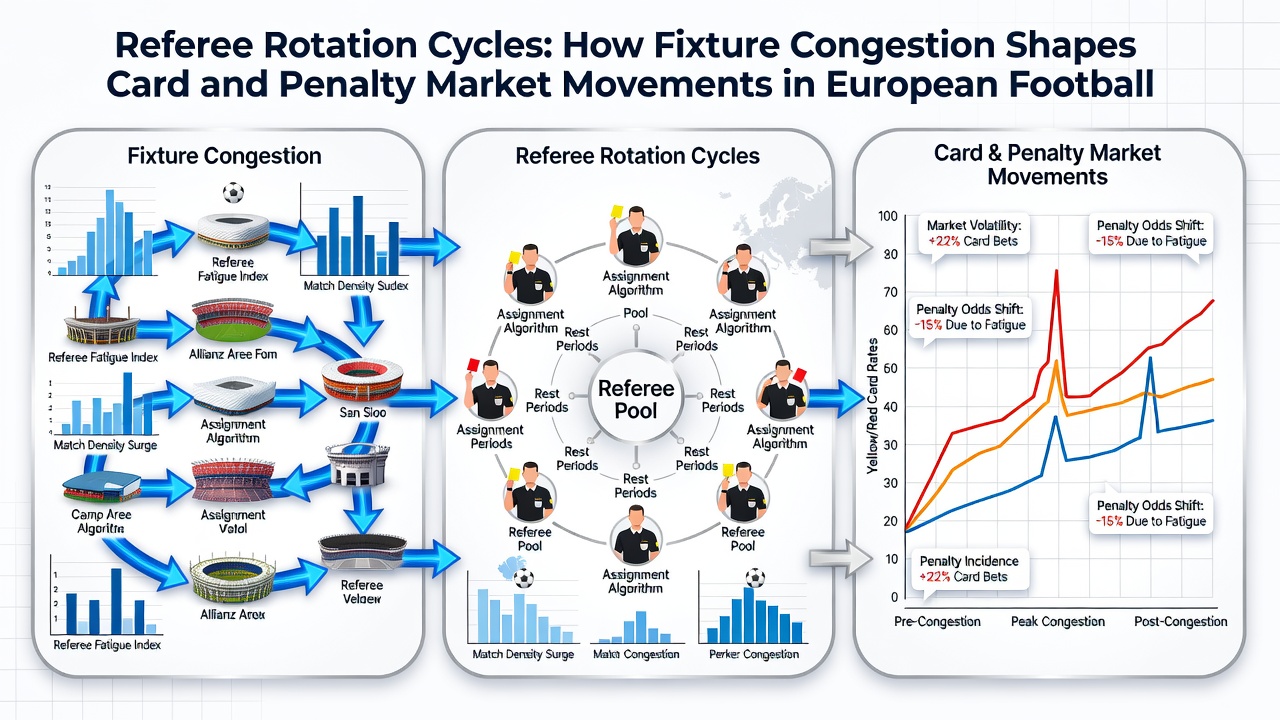
Trading desks at major operators track these shifts by comparing pre-match lines against in-play adjustments. When congestion peaks, early market prices for over-card totals open higher, then drift as bettors incorporate the rotation data. Similar movements appear in penalty markets, where the implied probability of an award rises modestly for teams playing their third match in twelve days. Industry reports from European betting associations note that these adjustments occur consistently yet remain within ranges that preserve bookmaker margins across the round.
Tracking Data Sources Across Regions
Analysts combine official match reports from UEFA with supplementary datasets published by national federations and academic groups. A study conducted at a German sports science institute examined referee workload across the 2024-25 campaign and found that officials averaging more than 180 minutes of high-intensity running per week showed slight increases in foul calls during their next assignment. Those findings align with observations from Canadian and Australian researchers who examined similar patterns in their domestic leagues during overlapping international windows.
Market liquidity for card and penalty props grows during these congested phases because traders receive fresh statistical inputs after each round. Operators update models using referee-specific historical data rather than team averages alone, which produces more granular pricing. Observers note that the resulting lines reflect the cumulative effect of rotation policies rather than isolated match events.
Conclusion
European cup calendars create recurring periods of fixture density that prompt UEFA to rotate match officials on accelerated cycles. Historical sanction data demonstrate corresponding shifts in card totals and penalty awards that betting markets incorporate through adjusted lines. Continued monitoring of rotation schedules alongside performance metrics provides a factual basis for understanding how these variables interact across future seasons, including the July 2026 qualifier window.