International Breaks and Their Ripple Effects on Domestic League Betting Markets
Wendy Baumann · Aug 17, 2026
International Breaks and Their Ripple Effects on Domestic League Betting Markets
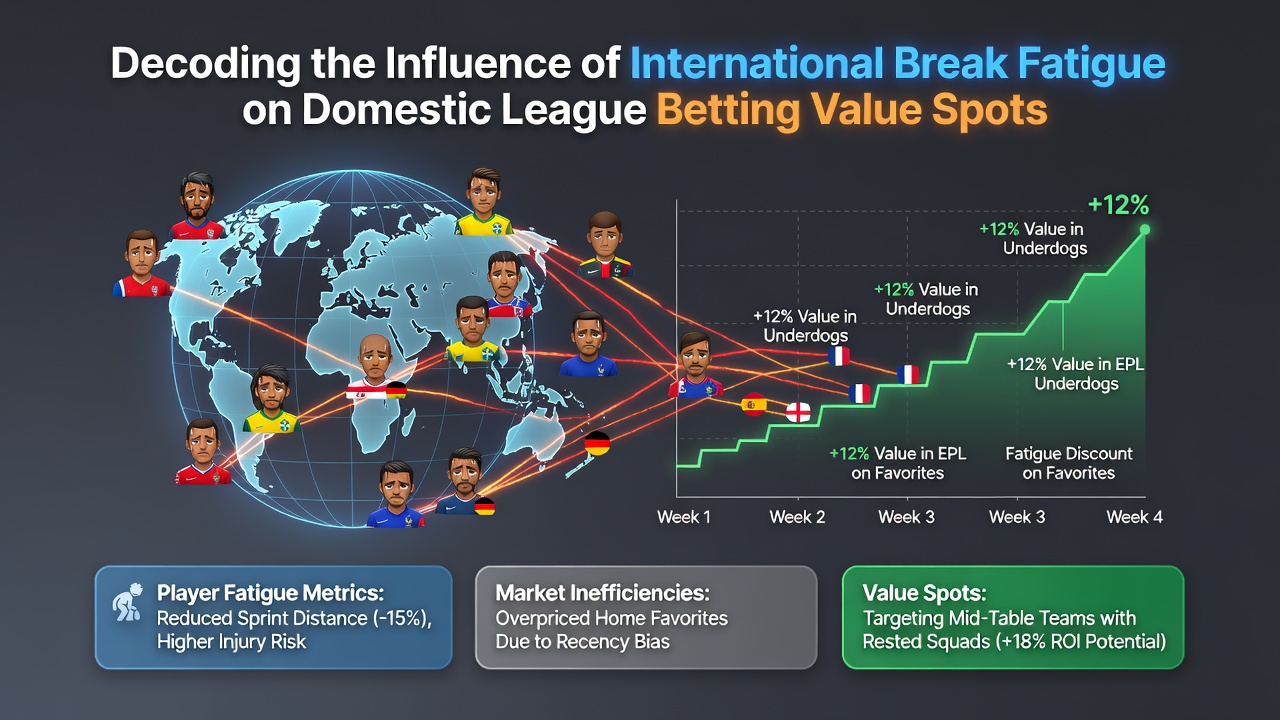
International breaks create measurable disruptions in domestic league schedules, and analysts track these patterns through performance data across multiple competitions. Players selected for national teams often travel long distances, compete in high-intensity matches, and return with limited recovery time before resuming club duties. Researchers have documented declines in sprint distance, passing accuracy, and overall work rate in the first domestic fixture after such absences, according to studies compiled by sports science departments at universities in Europe and North America.
Leagues in England, Spain, Germany, and Italy schedule these breaks at regular intervals, typically aligned with FIFA and confederation calendars. Data collected from the 2024-2025 season showed that teams with four or more players returning from international duty recorded a higher incidence of lower goal tallies in the subsequent round of fixtures. Bettors who monitor squad travel logs and fixture congestion find value in markets that reflect reduced attacking output rather than relying on historical averages alone.
Performance Metrics After International Windows
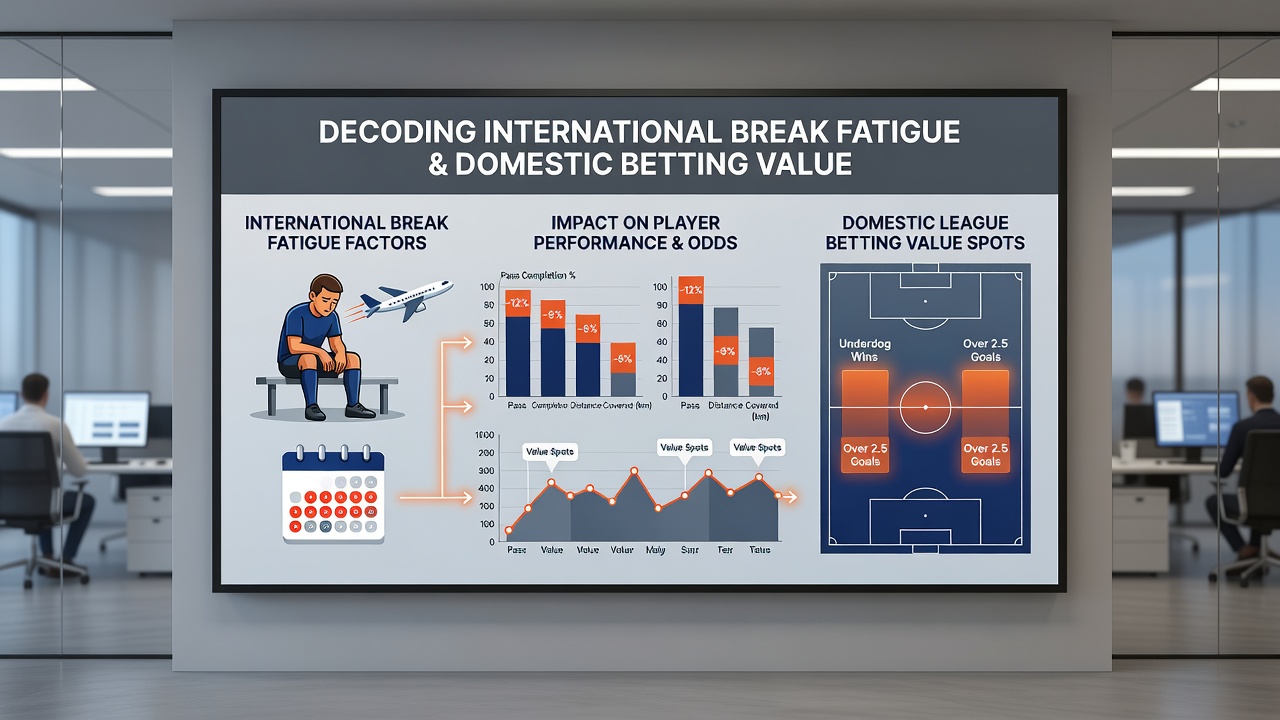
Tracking systems used by professional clubs record heart-rate variability and muscle soreness levels upon player return, and these indicators correlate with on-pitch statistics in the following domestic match. One study from an Australian sports institute examined 280 players across five European leagues and found average reductions of 12 percent in high-intensity running in the 72 hours after intercontinental travel. Such figures appear consistently in both attacking and defensive phases, leading to fewer shots on target and increased turnovers in midfield areas.
Goalkeepers and central defenders often exhibit the clearest drops in concentration metrics after long-haul flights, while wide forwards show reduced crossing completion rates. These patterns create opportunities in player-prop markets and team-total goals when operators adjust lines based on pre-break form rather than post-break adjustments. Observers note that early-season windows, including those scheduled for August 2026 ahead of the new campaign, produce similar fatigue signals when players return from summer tournaments or qualifiers.
Identifying Value in Specific Betting Markets
Under 2.5 goals markets gain traction when multiple starters from the same club participate in midweek international fixtures, particularly those involving extra-time periods or penalty shootouts. Historical datasets from the Bundesliga and Serie A indicate that matches involving at least three fatigued players per side produce lower-scoring outcomes at a rate 18 percent above seasonal norms. Spread markets also shift when bookmakers initially price fixtures using season-long averages without incorporating travel and recovery data.
Asian handicap lines sometimes undervalue the away side when the home team fields several recently returned internationals, especially in congested urban derbies where recovery facilities vary. Analysts cross-reference official match reports from national federations with club press conferences to estimate exact minutes played and travel distance, then compare these against domestic fixture lists released by league organizers.
League-Specific Patterns and Regional Variations
Northern European leagues experience different fatigue profiles compared with southern counterparts because of climate and pitch conditions upon return. Matches in Scandinavia scheduled shortly after September international windows display elevated draw percentages, while Mediterranean leagues show increased late-game substitutions due to heat and accumulated workload. Canadian and South American domestic competitions report parallel trends when their players return from CONMEBOL or CONCACAF duty, according to aggregated reports from regional football associations.
Rotation policies implemented by club managers further complicate predictions, yet data from the French Ligue 1 demonstrates that squads with deeper benches mitigate fatigue effects more effectively than those reliant on a core group of starters. Bettors who examine substitution patterns from the previous domestic round alongside international minutes gain clearer edges in live-betting segments during the opening 30 minutes of post-break fixtures.
Integrating External Data Sources
Performance databases maintained by UEFA and similar bodies across other confederations supply granular tracking numbers that supplement publicly available statistics. Academic papers published in sports medicine journals frequently include regression models linking travel time, match load, and subsequent domestic output, allowing systematic comparison across seasons. These resources remain accessible through university libraries and open-access repositories, providing consistent benchmarks without dependence on any single regulatory authority.
Fixtures in August 2026 will coincide with the opening weeks of several major leagues following a condensed international calendar, and early indicators from pre-season tournaments already point to elevated rotation rates among clubs with large national-team contingents. Monitoring official squad announcements from federations in multiple continents helps identify clusters of players most likely to carry residual fatigue into their first club outing.
Conclusion
International breaks generate predictable shifts in player availability and physical readiness that influence domestic league outcomes across multiple markets. Systematic review of travel data, recovery metrics, and historical performance records reveals consistent value spots for those who adjust expectations beyond standard seasonal averages. As leagues prepare for the 2026 campaign, continued collection of these indicators supports more precise evaluation of betting lines shaped by post-international fatigue.