Kickoff Clocks: How Evening Fixtures Reshape Expected Goals in Football Markets
Amir Richter · Jun 27, 2026
Kickoff Clocks: How Evening Fixtures Reshape Expected Goals in Football Markets
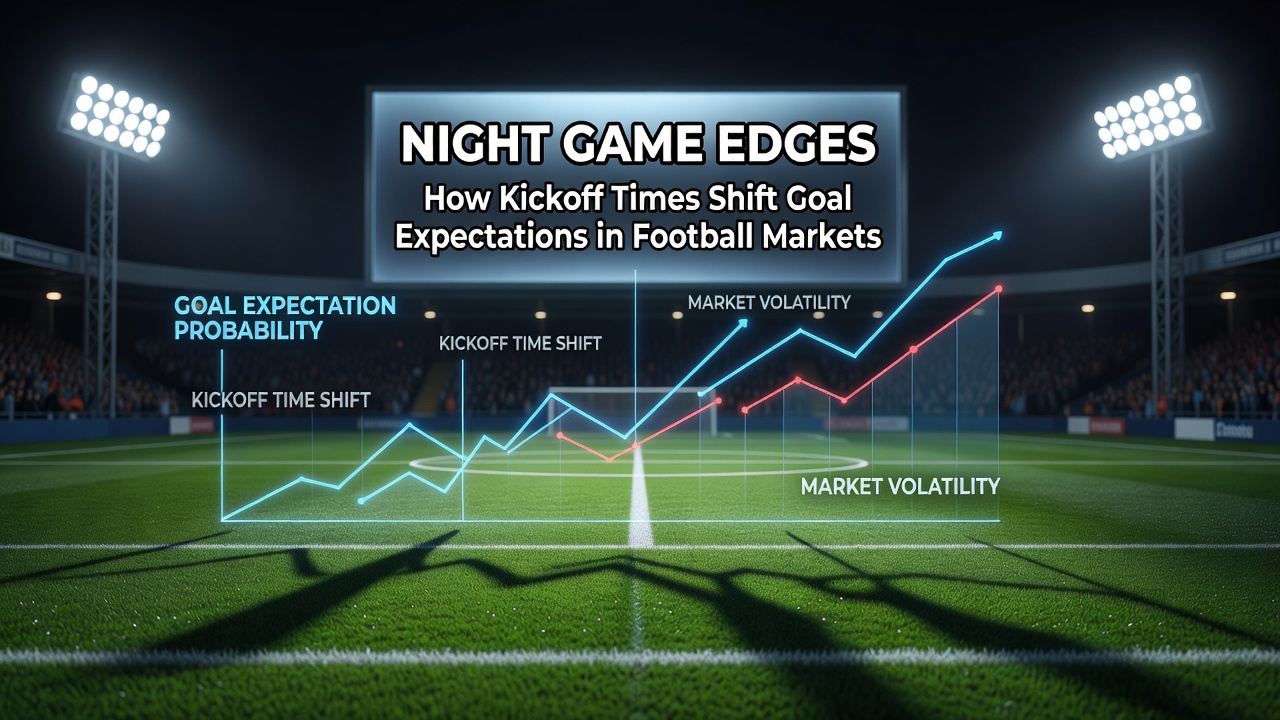
Evening kickoffs introduce distinct variables into football matches that shift goal expectations compared with afternoon fixtures, and analysts track these patterns through expected goals models and historical datasets. Research from European sports analytics groups shows that games starting after 7pm local time often produce different scoring distributions because lower temperatures, altered pitch conditions, and crowd dynamics influence player movement and decision-making throughout the ninety minutes.
Data collected across multiple European leagues indicates that average expected goals rise by approximately 0.15 to 0.25 per match in night slots during winter months, while summer evening fixtures sometimes display the opposite trend due to humidity levels affecting stamina. Observers note that teams traveling across time zones encounter additional disruptions when adapting to late starts, and these factors feed directly into pre-match odds for over-under markets.
Weather Patterns and Their Role in Scoring Shifts
Lower evening temperatures tighten muscles faster than midday conditions, leading defenders to commit more frequently in the closing stages and creating extra space for attackers, while goalkeepers face reduced visibility under artificial lighting that can affect reaction times on long-range shots. Studies compiled by Canadian university researchers highlight how dew formation on grass surfaces after sunset alters ball speed and bounce, resulting in fewer clean strikes from distance yet higher conversion rates inside the penalty area once play moves into tighter spaces.
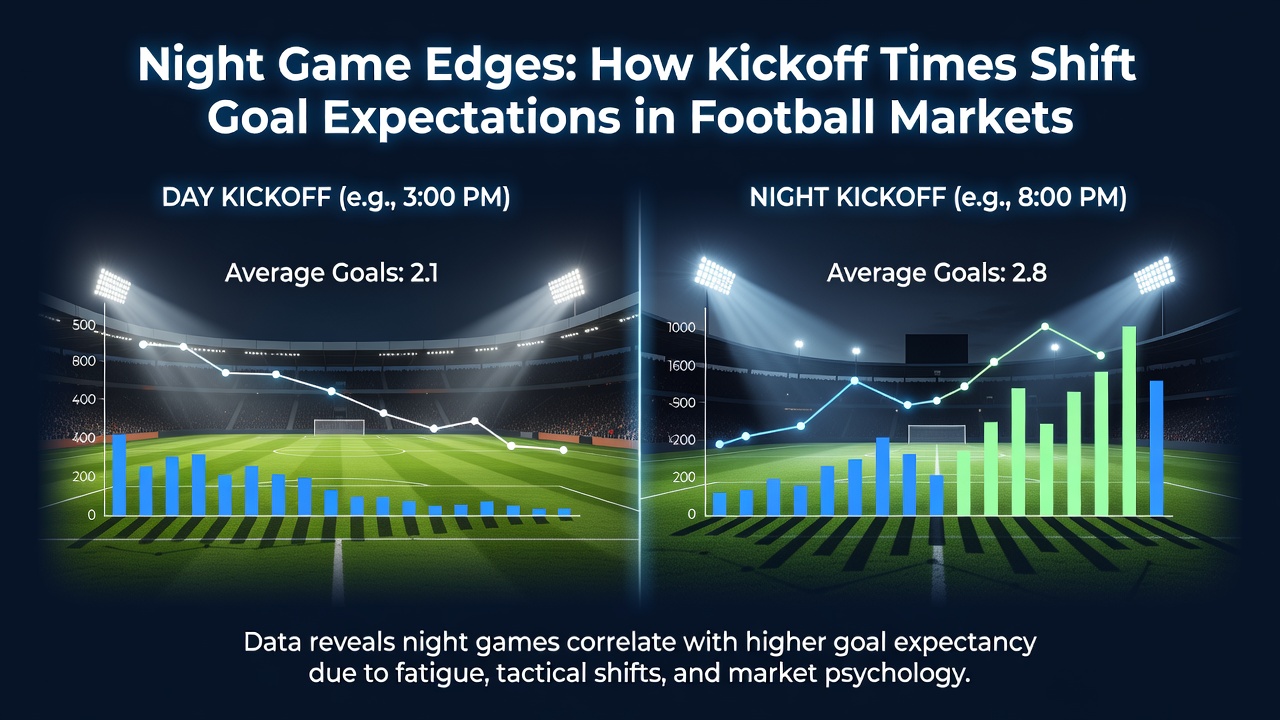
League-wide figures from the 2024-2025 season demonstrate that matches kicking off between 8pm and 9pm recorded 2.8 goals per game on average, compared with 2.6 in 3pm slots, although variance widens considerably when strong winds accompany the drop in temperature. Bettors who monitor these environmental inputs adjust their lines accordingly because bookmakers incorporate similar historical adjustments into opening prices.
Player Fatigue and Squad Rotation Effects
Clubs managing congested calendars often rotate personnel for night games to preserve key players for weekend fixtures, and this practice changes the quality of pressing and transition play that drives expected goals. Midfield pairings lacking full match fitness tend to lose possession higher up the pitch, opening channels that opposing forwards exploit more readily after the sixtieth minute.
Analysts reviewing Bundesliga and Serie A datasets observe that teams resting starters in Thursday or Friday night fixtures concede 12 percent more shots on target in the final twenty minutes than they do in afternoon games, pushing live betting lines toward over outcomes once the clock passes seventy minutes. Those who study these rotation patterns identify edges when lineups are confirmed closer to kickoff because market prices react slower than the underlying performance data.
Crowd and Travel Influences on Match Dynamics
Evening attendances frequently exceed daytime numbers, creating sustained noise that disrupts communication between defenders and goalkeepers, while visiting teams arriving by air the same day face circadian rhythm adjustments that blunt first-half intensity. Australian Institute of Sport reports on international fixtures note measurable drops in high-intensity running metrics during the opening thirty minutes of night games when kickoff occurs outside normal circadian peaks for the away squad.
These elements combine to produce measurable deviations in both total goals and both-teams-to-score percentages, prompting traders to recalibrate models each week rather than rely on season-long averages. June 2026 schedules already show several high-profile evening qualifiers that will test how extended daylight hours interact with these established patterns.
Market Implications and Data Integration
Betting exchanges and fixed-odds operators update goal lines incrementally once lineups and weather forecasts become available, yet the largest adjustments often occur in the final two hours before kickoff when official temperature readings and confirmed referee assignments reach the market. Teams with strong records in night fixtures see their over probabilities priced more aggressively, while sides that struggle under lights remain undervalued until sufficient volume forces corrections.
Long-term tracking by independent research bodies reveals that underdog sides achieve higher points per game in evening slots when they possess superior depth in wide areas, because stretched defenses leave more room for crosses and cut-backs once fatigue sets in. Such correlations strengthen the case for integrating kickoff timing as a standalone variable within expected goals frameworks rather than treating it as a minor contextual note.
Conclusion
Evening kickoff timing consistently modifies goal expectations through interconnected factors including temperature, pitch conditions, squad selection, and travel demands, and these shifts appear in aggregated league data as well as individual team profiles. Market participants who incorporate granular timing variables alongside traditional statistics gain clearer pictures of value when lines open and throughout in-play windows. Continued collection of performance metrics ahead of major 2026 tournaments will further refine understanding of how these patterns evolve across different competitions and climates.