League One Live Betting: Half-Time Score Trends and Strategic Entry Points
Rafael Baumann · May 27, 2026

League One Live Betting: Half-Time Score Trends and Strategic Entry Points
Half-time score distributions in EFL League One matches create measurable patterns that shape live betting decisions across the second half, and analysts track these outcomes season after season to locate repeatable edges. Data compiled across multiple campaigns shows that 0-0 and 1-0 half-time results occur more frequently than other combinations, which in turn influences the availability of value on over/under markets, both-teams-to-score lines, and comeback propositions once play resumes.
Common Half-Time Outcomes and Their Frequency
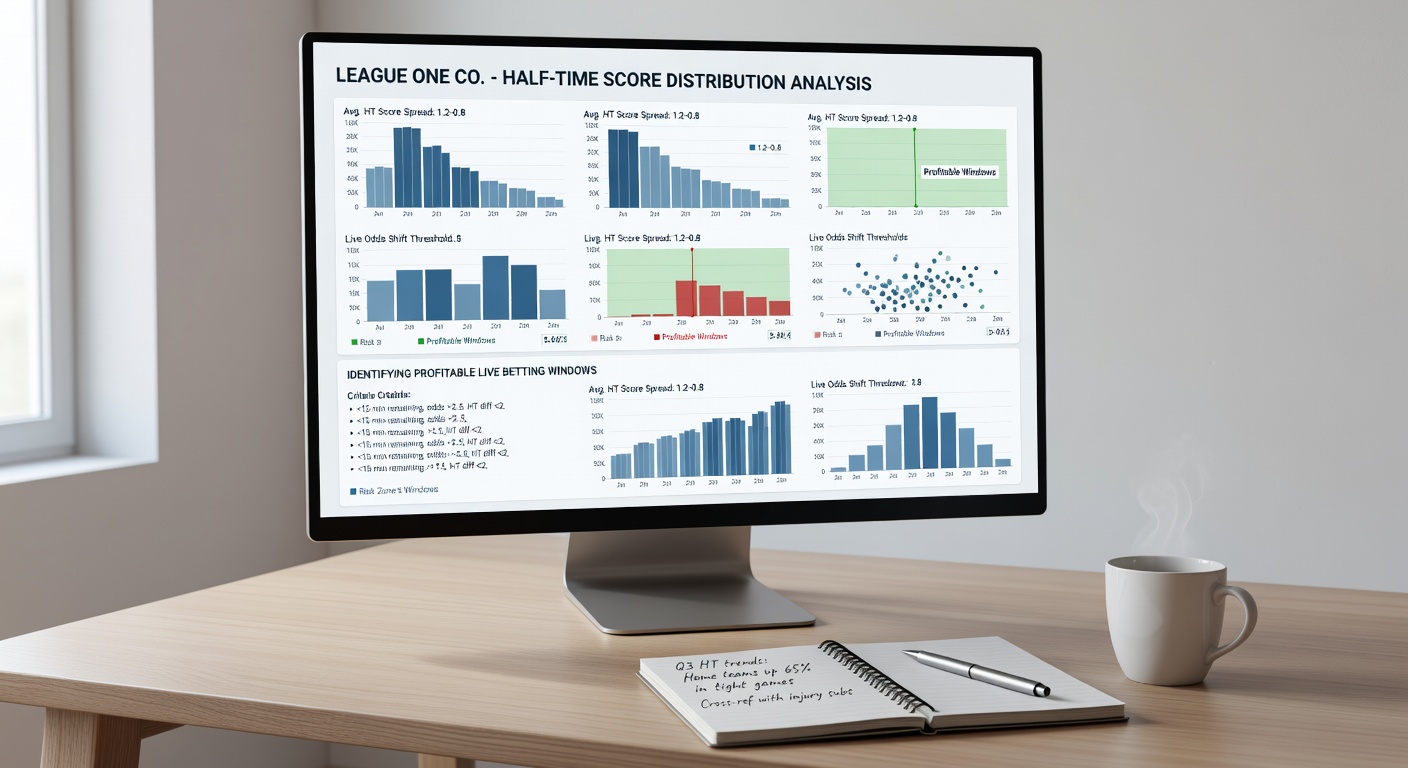
League One contests produce a distinct profile compared with higher divisions because of differences in pace, tactical discipline, and squad depth, while researchers note that low-scoring first halves remain the norm in roughly 60 percent of fixtures. Figures reveal that 0-0 half-time scores appear in approximately 32 percent of matches, followed by 1-0 results at around 25 percent, with 1-1 and 2-0 outcomes trailing behind; these percentages hold steady when aggregated over the past five seasons and provide a baseline for identifying when markets overreact at the interval.
Teams that reach half time with a single-goal lead tend to maintain that advantage or extend it in the majority of cases, although the margin narrows once fatigue and substitutions alter the tempo. Observers note that the second half therefore becomes the period where live odds adjust most sharply, creating windows for bettors who monitor statistical tendencies rather than reacting to early momentum alone.
Identifying Entry Points After the Break
Live betting windows open most reliably when half-time scores sit at 0-0 or 1-0, because those states correlate with elevated probabilities for total goals rising above 2.5 or for the trailing side to equalize. Data shows that matches level at the interval generate the highest volume of both-teams-to-score activity after the restart, especially when both sides have recorded at least four shots on target before the break.
Coaches who favor high-pressing systems often see their teams concede more space once the second half begins, and this shift produces measurable increases in expected goals for the opposition. Those who've studied League One footage across the 2024-25 campaign point to specific clubs whose second-half concession rates climb by double digits, offering a practical filter for selecting which live markets merit attention once the whistle sounds again.
Seasonal Context Heading Into 2026
As the 2025-26 campaign moves toward its conclusion in May 2026, fixture lists tighten and rotation becomes more pronounced, which further accentuates the value of half-time distributions. Matches played in the final weeks often feature altered lineups, and historical records indicate that such games produce a slightly higher share of 0-0 intervals followed by increased second-half scoring. Bettors who track team news alongside scoreline data gain an additional layer of context for timing entries into over 1.5 or draw-no-bet positions.
Case Examples From Recent Fixtures
Take one mid-table side that reached half time 1-0 down in nine of its opening fifteen fixtures; the pattern showed that the team scored first in the second half on six occasions, turning the live over 2.5 market into a consistent option once the interval odds lengthened. Similar sequences appear across multiple clubs each season, and the repetition allows observers to build shortlists of teams whose second-half behaviors diverge from league averages.
Another dataset compiled by analysts at Stats Perform highlights how 2-0 half-time scores, though less common, produce the strongest correlation with under 3.5 goals in the full match. This outcome stems from defensive consolidation rather than chance, and it supplies a narrower but reliable window for those focusing on total goals after the break.
Practical Filters for Live Windows
Combining half-time score with shot and xG differentials refines the selection process further. When a side dominates possession yet trails at the interval, the probability of a late equalizer rises, which in turn supports live both-teams-to-score positions. Research conducted through Canadian sports analytics programs confirms that these differentials remain predictive even when adjusted for home and away status, giving bettors a portable framework that travels across League One grounds.
Weather conditions and pitch quality also interact with these patterns, since heavier surfaces slow transitions and reduce the frequency of quick second-half goals. Data indicates that matches played on rain-affected pitches in northern venues record fewer goals after half time, which tilts certain under markets into positive territory once the scoreline is known.
Conclusion
Half-time score distributions supply a structured lens for locating live betting opportunities in League One, and the patterns remain consistent enough to support systematic approaches. By layering scoreline history with secondary metrics such as shots and expected goals, observers isolate repeatable intervals where odds adjust in ways that reward timely entries. As the 2025-26 season approaches its final stages, these tendencies continue to offer measurable context for second-half decision making across the division.