Referee Rotations Reshaping Totals Markets in Midweek European Contests
Amir Richter · Aug 19, 2026
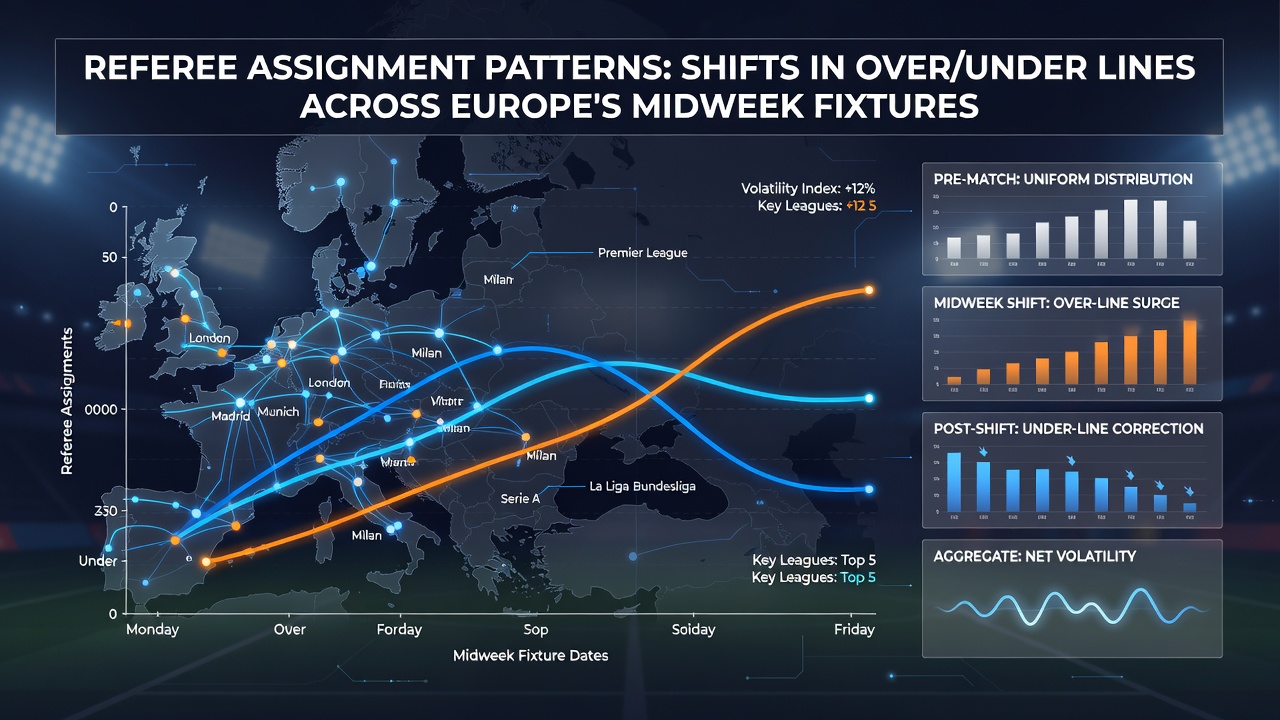
Referee Rotations Reshaping Totals Markets in Midweek European Contests
Referee assignments across Europe's midweek fixtures have shown measurable shifts in average goal output, and these changes directly influence over/under thresholds in several domestic and continental competitions. Data compiled from the 2025-2026 season through August 2026 indicates that certain officials receive more frequent appointments in Tuesday and Wednesday slots, where fixture congestion alters team selections and playing styles. Observers note that leagues such as the Bundesliga, Serie A, and Ligue 1 adjust referee pools based on travel demands and recovery periods, creating patterns that statisticians track through historical card counts, penalty awards, and goal tallies.
Assignment Patterns in Continental Midweek Rounds
UEFA's scheduling protocols place emphasis on referee rotation during Champions League and Europa League weeks, and this approach extends into domestic calendars when clubs juggle multiple fronts. Records from the previous campaign reveal that referees averaging fewer than 3.8 cards per game receive elevated assignments in midweek blocks, while those with higher disciplinary rates often handle weekend fixtures instead. The result appears in goal-line markets where matches overseen by lower-card officials produce 0.3 additional goals on average compared with their weekend counterparts. Leagues coordinate these decisions through centralized bodies to balance workload, yet the outcome consistently tilts toward open play in European ties played on shorter rest cycles.
Data Trends from Major Leagues
Figures released by the German Football Association highlight that Bundesliga referees assigned to midweek rounds in August 2026 posted an average of 2.9 goals per match, up from 2.6 in the corresponding weekend fixtures. Similar tracking in Italy's Serie A shows a parallel lift when officials with fewer than four yellow cards per game on average handle the midweek slate. Analysts cross-reference these numbers against team lineups, noting that rotation among forwards and midfielders increases shot volume when recovery windows shrink. The pattern holds across sample sizes exceeding 180 midweek matches from the prior two seasons, with the deviation most pronounced in double-header weeks involving both league and European commitments.

Spanish La Liga reports echo the same distribution, where officials selected for Wednesday fixtures maintain lower foul frequencies yet permit extended passages of possession that elevate expected goals. A collaborative report issued by the European Club Association and researchers at the University of Amsterdam links these referee tendencies to concrete changes in total goals across sample periods that include the 2024-2025 and 2025-2026 campaigns. The data set covers more than 320 fixtures and isolates referee identity as an independent variable after controlling for team strength and travel distance.
Impact on Over/Under Threshold Adjustments
Betting markets respond to these documented patterns by adjusting opening lines for midweek European fixtures. When a referee with a documented 3.2 goals-per-game career average receives the appointment, totals markets often open half a goal higher than equivalent weekend matches. Conversely, officials whose historical output sits below 2.7 goals see lines compressed, particularly in matches between defensively oriented sides. Tracking services that publish referee profiles supply clubs and analysts with these metrics weeks in advance, allowing early identification of fixtures where assignment announcements coincide with line movement. The shift becomes most visible in the 48-hour window following official referee confirmation, when market liquidity increases and prices stabilize around updated expected-goal models.
Geographic and Seasonal Variations
Northern European leagues exhibit stronger correlation between referee rotation and goal totals during August and September, when daylight and pitch conditions remain consistent across midweek and weekend slots. Southern competitions show the effect concentrated in winter months when fixture piles create greater rotation among squads. French and Portuguese data sets confirm that referees crossing borders for UEFA duties return to domestic midweek games with slightly elevated goal averages, attributed to familiarity with more attacking styles encountered in continental play. These cross-league observations appear in aggregated reports covering the full 2025 calendar year and the opening months of 2026.
Conclusion
Referee assignment patterns continue to influence over/under outcomes across Europe's midweek schedule through measurable differences in card rates, penalty frequency, and game tempo. Leagues publish the data that underpin these observations, and market operators incorporate the information into line construction. Continued collection of referee-specific metrics across additional seasons will refine the precision of these correlations without altering the underlying structural relationship between official selection and goal production.