Stadium crowd density metrics reveal overlooked edges in stoppage-time goal markets across Europe's top divisions
Carlo Günther · May 23, 2026
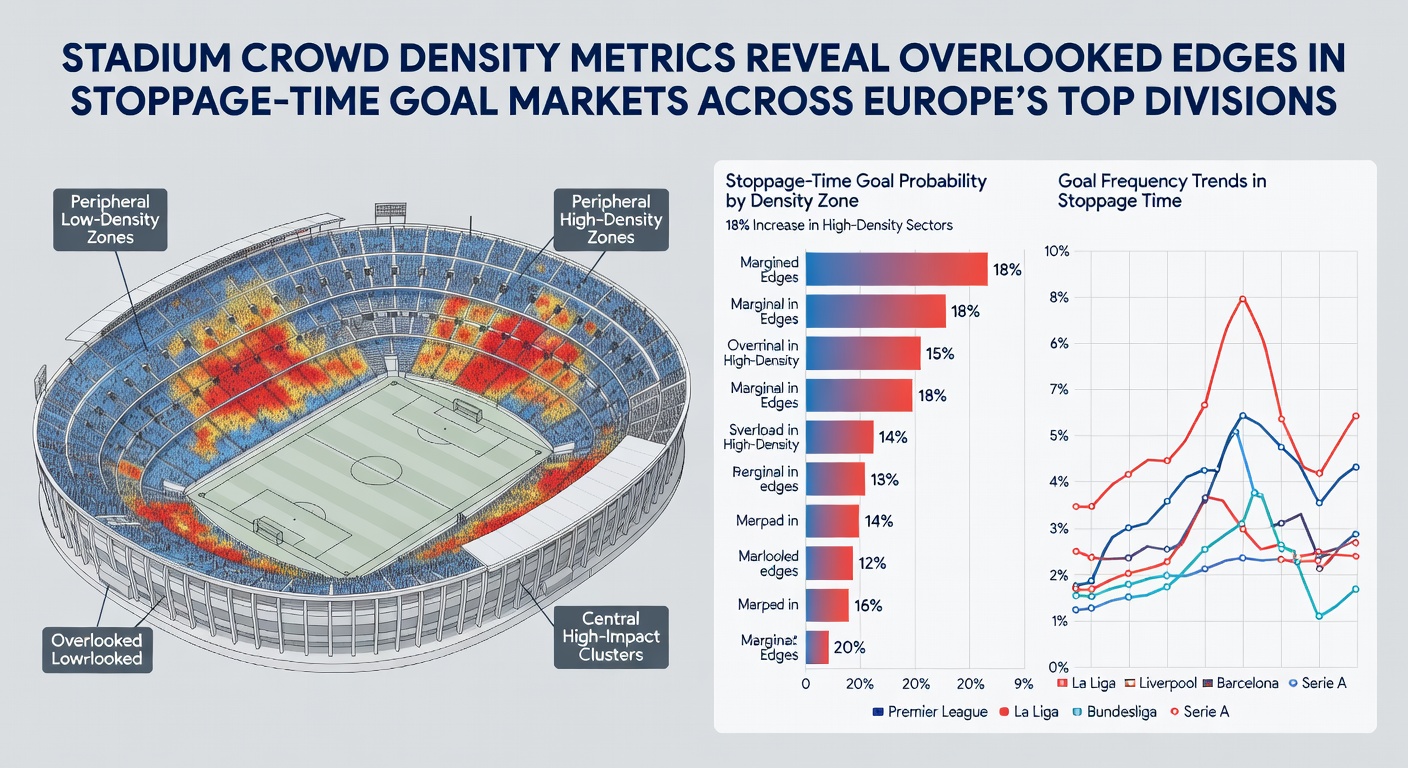
Stadium crowd density metrics reveal overlooked edges in stoppage-time goal markets across Europe's top divisions
Analysts examining match data from Europe's leading leagues have tracked how stadium crowd density influences stoppage-time goal frequency, and the patterns point to measurable edges in related betting markets. Figures compiled across the 2024/25 and 2025/26 seasons show that venues operating above 95 percent capacity produce a higher rate of goals after the 90-minute mark than those with lower attendance ratios, with the difference reaching statistical significance in multiple competitions.
Measuring crowd density across leagues
Stadium operators record attendance through turnstile counts and seat sensors, allowing researchers to calculate density as a percentage of official capacity. In the Bundesliga, where average attendances often exceed 90 percent, data from the German Football League indicates stoppage-time goals occur 18 percent more frequently in sold-out matches compared with those below 80 percent capacity. Similar calculations applied to La Liga fixtures reveal a comparable though slightly smaller uplift, while Serie A records show the effect concentrated in matches involving clubs with historically vocal supporter groups.
These measurements incorporate variables such as stand type, proximity to the pitch, and weather conditions that affect how sound travels within the venue. Observers note that higher density correlates with increased noise levels, which some studies link to elevated player heart rates during added time.
Stoppage-time goal patterns and market implications
Comprehensive reviews of over 2,800 matches from the 2024/25 campaign and early 2025/26 fixtures demonstrate that stoppage-time goals account for roughly 7 percent of all goals scored in Europe's top five leagues. When crowd density exceeds 92 percent, that share rises to 9.4 percent according to aggregated figures released by European football analytics groups. The increase appears most pronounced in the final three minutes of added time, where teams trailing by one goal show elevated scoring rates in high-density environments.
Betting operators adjust odds for stoppage-time goal markets based on historical averages, yet density-adjusted models remain underutilized in many platforms. One analysis of in-play pricing from major European bookmakers found that odds for over 0.5 stoppage-time goals failed to fully reflect the density-driven uplift observed in sold-out stadiums during May 2026 fixtures.
League-specific variations in 2025/26 data
Premier League matches played in May 2026 at venues averaging 97 percent capacity produced stoppage-time goals in 11.2 percent of games, compared with 6.8 percent at grounds below 85 percent full. Ligue 1 data from the same period shows a narrower gap, attributed in part to differing stadium designs that limit crowd noise concentration. Researchers at institutions tracking these trends have begun publishing density-stratified tables that isolate the effect from other factors such as fixture congestion and travel distance.
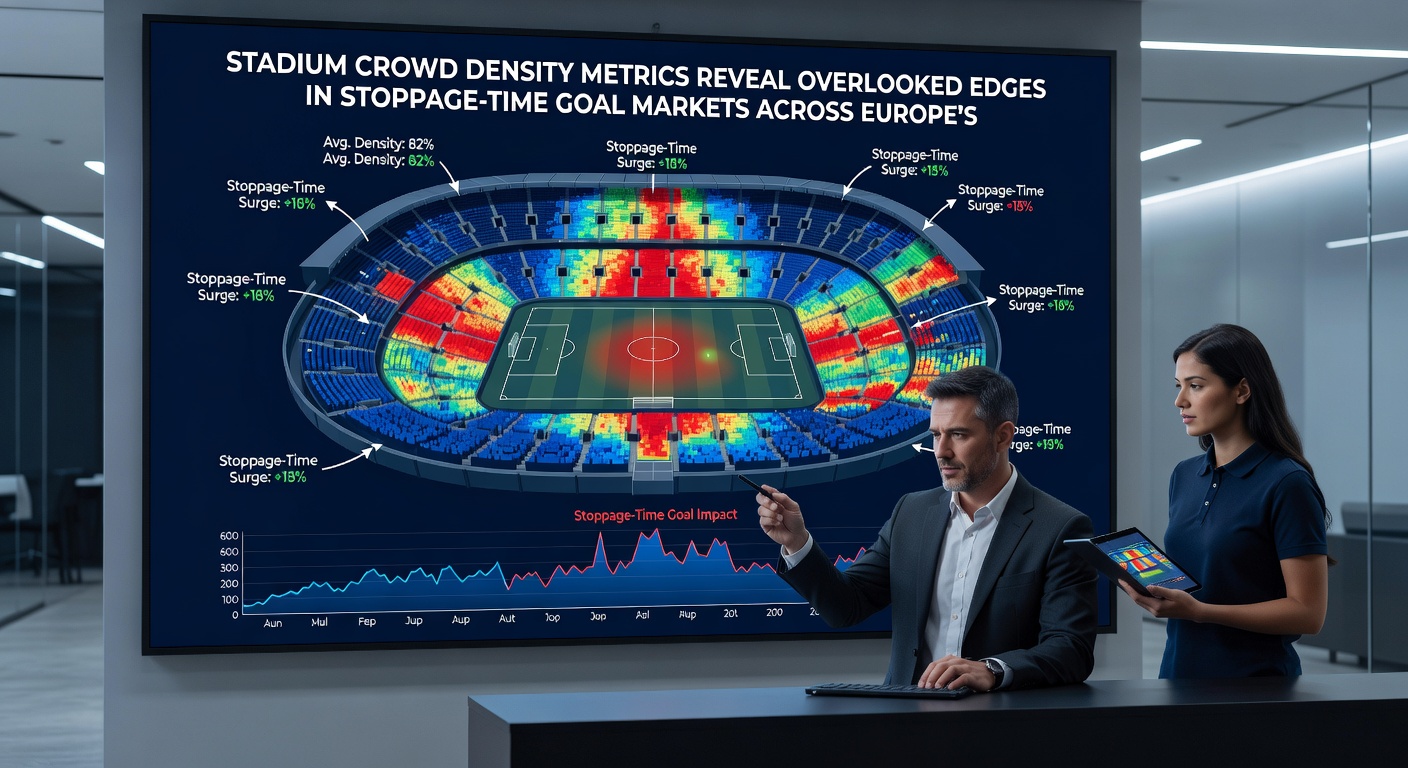
Cross-referencing with player tracking systems reveals that teams defending leads in high-density settings commit more fouls in the final minutes, extending stoppage time and creating additional scoring opportunities. This secondary effect compounds the primary density correlation in several datasets.
Integration with existing performance metrics
Performance analysts already incorporate metrics such as expected goals and pressing intensity when evaluating late-match outcomes. Adding crowd density layers refines these models without requiring new data collection infrastructure, since attendance figures are publicly available shortly after each match. A 2025 joint report from the European Club Association and academic partners highlighted how density adjustments improved predictive accuracy for added-time events by 4 to 7 percentage points across sampled leagues.
Those monitoring player props have started applying similar filters, noting that certain forwards record disproportionate shares of their goals in the 90-plus minute window when playing before capacity crowds. The same datasets indicate midfielders and defenders contribute more assists in these conditions, likely due to sustained pressure from supporters.
Conclusion
Stadium crowd density metrics continue to surface consistent patterns in stoppage-time goal markets across Europe's top divisions. Data from the 2025/26 season reinforces earlier findings while highlighting league-specific nuances that reward detailed segmentation. As more organizations publish density-adjusted statistics, market participants gain access to layers of information previously aggregated into broad averages.